
येन बद्धो बली राजा दानवेन्द्रो महाबलः।
तेन त्वामभिबध्नामि रक्षे मा चल मा चल॥
Transliteration
Yena baddho balī rājā dānavendro mahābalaḥ |
Tena tvāmabhibadhnāmi rakṣe mā cala mā cala ||
Meaning & Significance
Translation: “I tie on you the sacred thread (Raksha) by which the mighty demon king Bali was bound. O protective thread, do not waver; remain firm and steadfast forever.”
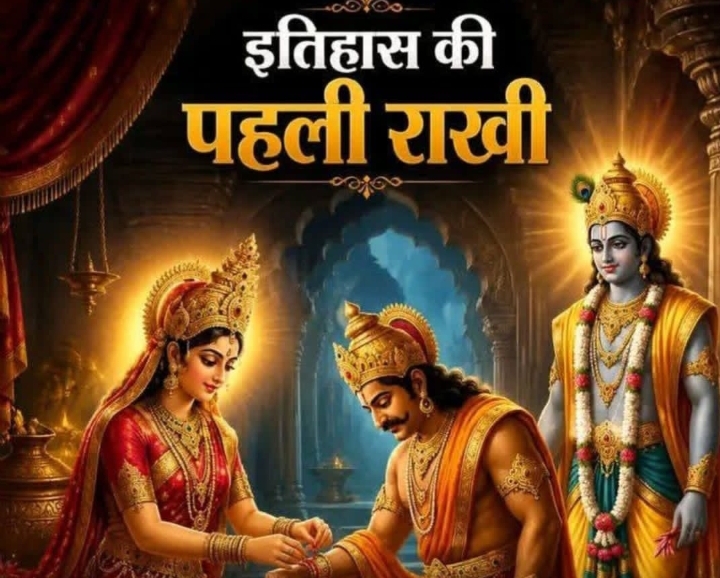
Context: During the Vamana avatar, Lord Vishnu bound King Bali to protect dharma, and Goddess Lakshmi later tied a sacred thread around Bali’s wrist, making him her brother and securing Vishnu’s return. Reciting this mantra while tying the Rakhi invokes lifelong protection, strength, and unwavering faith.
The tradition of reciting the Bali mantra on Raksha Bandhan stems from the Bhagavata Purana and the legend of Lord Vishnu’s Vamana avatar, King Mahabali, and Goddess Lakshmi.
King Bali’s Conquest & The Vamana Avatar
King Bali (the grandson of Prahlada) was a noble, deeply devoted, and extraordinarily charitable Asura king. After conquering the three worlds (Triloka), he displaced Indra and the Devas from the heavens.
To restore cosmic balance without destroying the righteous Bali, Lord Vishnu took birth as the dwarf Brahmin, Vamana. He visited King Bali during a grand sacrificial ritual (Ashwamedha Yajna) and asked for a simple donation: as much land as he could cover in three steps.
2. The Three Steps & Bali’s Boon
Bali agreed despite the warnings of his guru, Shukracharya. Vamana expanded into his cosmic form (Trivikrama):
First step: Covered the entire earth.
Second step: Covered the heavens and the skies.
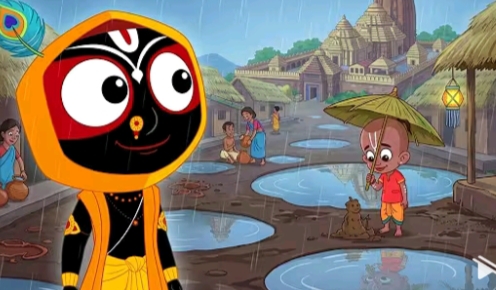
With nowhere left to place his third step, Bali humbly bowed his head and offered it to the Lord. Deeply impressed by Bali’s devotion and truthfulness, Vishnu sent him to rule the netherworld (Sutala Loka, often associated with Patala) and granted him a boon. Bali requested that Vishnu stay with him in the netherworld as his protector and doorkeeper (Dwarapala). Vishnu, bound by his devotee’s love, agreed and took up guard at Bali’s palace gates.
3. Goddess Lakshmi’s Plan
With Lord Vishnu residing in Sutala, Vaikuntha fell deserted, and Goddess Lakshmi grew anxious to bring her consort back.
Disguising herself as an ordinary poor woman, Lakshmi arrived at Bali’s palace seeking shelter and protection. King Bali welcomed her as a sister with grand hospitality. On the full moon day of Shravana (Shravana Purnima), Lakshmi tied a thread made of colored cotton (Raksha Sutra) on Bali’s wrist, praying for his protection, long life, and prosperity.
4. The Wish & Liberation
Touched by the gesture, King Bali asked her what gift she desired. Lakshmi revealed her true divine identity and said:
”O King, I desire neither gold nor kingdom. I only ask for my husband to be freed from his duty as your doorkeeper so that he may return to Vaikuntha.”
King Bali gladly agreed, honoring his word and duty as a brother. Lord Vishnu was thus freed and returned to Vaikuntha with Lakshmi.
The Enduring Tradition
Before leaving, King Bali received the blessing that any sister who ties a sacred thread on her brother’s wrist on Shravana Purnima and recites the protective verse will ensure health, safety, and prosperity for her brother, while invoking the same unbreakable bond of honor established between Bali and Lakshmi.
The tradition of reciting the Bali mantra on Raksha Bandhan stems from the Bhagavata Purana and the legend of Lord Vishnu’s Vamana avatar, King Mahabali, and Goddess Lakshmi – Dr Prasant Kumar Samantray MBBS MD AIIMS New Delhi now in Prayagraj