
India’s election chief became embroiled in a crisis of trust
Pradeep Kumar Panda Darshan Samikhya Bhubaneswar
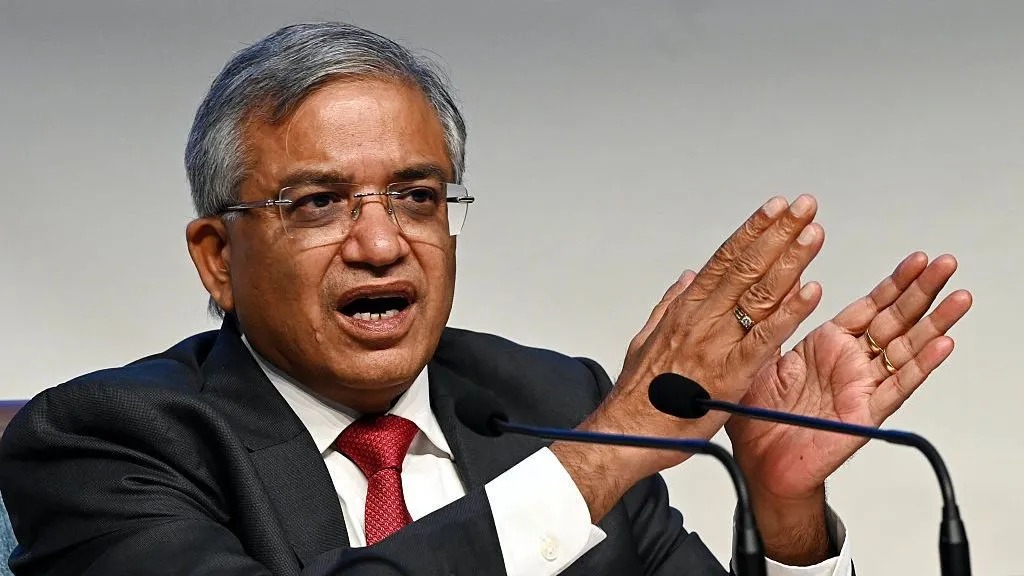
For most of his 36-year career in India’s bureaucracy, Gyanesh Kumar built a reputation for getting difficult things done. Now the 62-year-old, who runs elections in the world’s most populous country, faces a rather different challenge: defending how his own institution makes decisions — and facing mounting demands for his exit from parties that say the Election Commission has lost its independence.
It is an unusual position for a bureaucrat who spent decades outside the public gaze, despite being entrusted with some of the Indian government’s most politically sensitive assignments.
For about a year now, Kumar, India’s Chief Election Commissioner (CEC), has been under intense political pressure over a sweeping revision of the country’s electoral rolls known as the Special Intensive Revision, or SIR. The exercise, which began in Bihar last year, has since been extended to cover most of India and more than 130 million names have been struck from draft voter lists across 30 states and federally-administered territories — roughly 13% of India’s electorate.
The Election Commission says the exercise is intended to remove duplicate and ineligible entries while ensuring legitimate voters are included. Opposition parties and activists have alleged that it risks disenfranchising eligible voters. Kumar and the commission have rejected accusations that the process is being manipulated for political ends.
The Biju Janata Dal (BJD) has been among the sharpest critics. The party, which has ruled Odisha for decades and now sits in opposition there, says it opposed the SIR “from the very beginning.” In Odisha alone, official figures put deletions at over 20 lakh names; BJD leaders have claimed the real exclusion of eligible voters is significantly higher — in some statements exceeding 25–27 lakh — and allege a lack of transparency, manipulated data, and unanswered complaints about irregularities at the booth and district level. Senior BJD leaders have questioned why detailed reasons for mass deletions were not provided and pointed to alleged local statements suggesting political targeting of non-BJP voters.
Then, this week, the controversy moved inside Kumar’s own institution. An investigation by The Indian Express reported that his two fellow Election Commissioners, Sukhbir Singh Sandhu and Vivek Joshi, had formally objected at least 14 times over 10 months to decisions and orders they said had been issued without their knowledge. The report alleged that the disagreements went into the heart of the SIR — including how people are added to or removed from electoral rolls, changes to voter-registration procedures, and access to the database containing hundreds of millions of voters.
The allegations are particularly sensitive for the three-member Election Commission, where disagreements are decided by a majority.
Kumar has not personally responded to the investigation. The BBC has contacted his office for comment.
In a statement issued after the investigation, the commission did not deny the reported disagreements but rejected suggestions of a serious internal rupture, saying differences of opinion were part of normal deliberations and that its decisions over the past year — including on SIR — were ultimately unanimous. Over the weekend, Kumar, Sandhu and Joshi met and also issued a joint statement addressing some of the issues raised by the investigation. The commission also released a photograph of the three men together.
But the commission’s response has not put the controversy to rest. Opposition parties are preparing a motion in both houses of parliament seeking Kumar’s removal. Youth groups have threatened nationwide protests.
BJD has joined the demand in clear terms. Party president and former Odisha Chief Minister Naveen Patnaik stated that because of the “strong differences” between the Election Commissioners and the CEC, “the CEC should immediately resign and the whole SIR process should be thoroughly revisited.” BJD MP Sasmit Patra reiterated the call for Kumar’s resignation and removal, describing the SIR in Odisha as “a completely failed process” in which the party’s complaints about irregularities went unheard. The party has framed the issue not merely as internal procedural friction but as evidence that the integrity of the electoral rolls — and therefore of the democratic process — has been compromised.
Others have spoken in defence of the commission. Andhra Pradesh Chief Minister N. Chandrababu Naidu, whose party is part of the governing federal coalition, said the ECI’s clarification reaffirmed the institution’s “integrity” and criticised attempts to undermine confidence in India’s democratic processes.
For much of his career Kumar’s work happened away from the headlines. Former colleagues have described him as meticulous and deeply immersed in detail, someone who rarely lost his cool and knew how to deliver under pressure. When the Indian government needed officials to carry out some of its most consequential decisions, Kumar was repeatedly there.
Born in Uttar Pradesh, Kumar studied civil engineering at IIT Kanpur before joining the IAS in 1988. He was assigned to Kerala, where he served as district collector of Ernakulam and oversaw Kochi’s waterfront redevelopment. Later roles took him into more sensitive terrain: the Kashmir division of the Home Ministry, involvement in the Jammu and Kashmir Reorganisation Bill that revoked the region’s special status, and heading the team that implemented the Supreme Court’s Ayodhya temple ruling, including setting up the trust for construction.
People who worked with him described a hands-on administrator who “never left things for others” and remained calm under pressure.
Kumar retired from the civil service in January 2024. Less than two months later he was appointed an election commissioner — a day before the timetable for India’s general election was announced. In February 2025 he became Chief Election Commissioner. He was the first CEC appointed under a 2023 law that removed the Chief Justice of India from the selection panel and replaced the judge with a cabinet minister nominated by the prime minister. Opposition parties, including the BJD, have argued that the change weakens the commission’s independence. Rahul Gandhi, then a member of the selection panel, had opposed the appointment and sought deferral while the Supreme Court considered challenges to the new law. The law remains in force; its validity is still before the Court after a two-judge bench differed and referred the matter for larger-bench consideration.
Kumar quickly brought his administrative style to the job — biometric attendance at headquarters, reforms branded “EC 2.0,” and transfers of several chief electoral officers. But it is the SIR that has defined his tenure. As criticism grew, he publicly defended the exercise, at one point challenging Rahul Gandhi to substantiate allegations of “vote theft” in a sworn affidavit or apologise.
The Express investigation suggested questions were also being raised inside the commission. It alleged that Sandhu described one change as “unauthorised and illegal,” while both commissioners raised concerns about centralisation of the electoral-roll database and changes to its oversight.
The commission has disputed suggestions of a serious internal divide and said decisions, including on SIR, were unanimous. It announced operational changes: agendas circulated in advance, minutes issued, and directions from commissioners to be complied with.
Whether the controversy will have lasting consequences remains unclear. For the BJD, however, the reported internal objections only confirm what the party has argued from the outset: that the SIR process itself needs to be revisited, that large-scale deletions of eligible voters cannot be waved away as routine clean-up, and that the credibility of the institution requires the CEC to step aside. The party has made clear it intends to press the demand strongly — turning a national institutional dispute into a pointed regional political battle as well.