

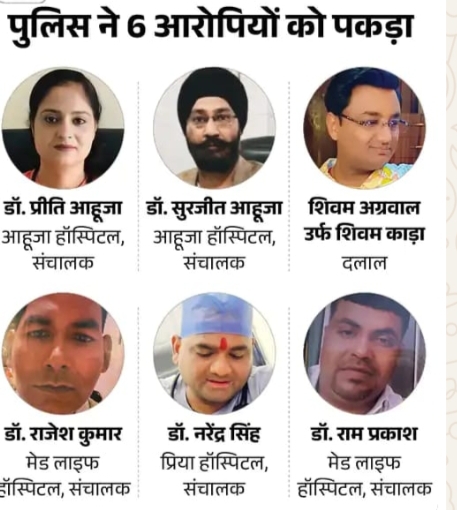
Recent police investigations, particularly in Kanpur, India, have exposed several kidney rackets involving doctors, hospital staff, brokers, and vulnerable donors. These operations illegally source kidneys from financially distressed individuals and sell them for massive prof
A major illegal kidney transplant racket was uncovered after a payment dispute between a donor and the racketeers.
The network, suspected to have links across India and to Nepal, used multiple hospitals to avoid detection. Brokers targeted vulnerable individuals through social media platforms like Telegram, promising them significant sums (around ₹10 lakh), while the organs were reportedly sold to recipients for as much as ₹60-90 lakh.
Arrests: Police arrested six individuals, including a doctor couple who owned one of the implicated hospitals (Dr. Surjit Singh Ahuja and Dr. Preeti Ahuja), other doctors, and a key middleman named Shivam Agarwal.
Scope: The gang is suspected of conducting 40-50 illegal transplants, some involving foreign nationals.
Maharashtra/Cambodia Network (January 2026): A pan-India and cross-border racket with links to Cambodia was busted following a farmer’s complaint. Two doctors from Delhi and Tamil Nadu were identified as prime accused, charging recipients ₹50-80 lakh per organ while paying donors only ₹5-8 lakh.
Notable Past Cases Involving Doctors
Gurgaon Kidney Scandal (2008): This highly notorious case involved a doctor named Dr. Amit Kumar, who was dubbed “Doctor Horror” by the media.
Details: Kumar and his associates targeted the poor and lured them into clinics where their kidneys were forcibly removed or taken under false pretenses. The organs were sold to wealthy clients, including foreigners.
Outcome: Dr. Amit Kumar and his brother were eventually arrested in Nepal after an international manhunt and convicted, receiving seven-year prison sentences.
Organ trade is illegal in most countries, including the US and India, with commercial transactions for organs strictly prohibited. Cases like these highlight the ongoing issue of organ trafficking, which often exploits poverty and involves a network of medical professionals, agents, and hospitals.
Story’:Wikipedia
imaje source ;Dainik Bhaskar




Leave a Reply