


Two Years of ‘Double Engine Sarkar’: A Saga of Broken Promises, Governance Failure and Rising Insecurity in Odisha
Pradeep Kumar Panda Darshan Samikhya Bhubaneswar
Exactly two years after the BJP assumed power in Odisha promising rapid development under the “Double Engine Sarkar” model, the state finds itself grappling with a sobering reality. What was touted as a new era of progress and security has, according to critics, delivered a litany of failures across governance, law and order, economy, and public welfare. The Biju Janata Dal (BJD) and several opposition voices have compiled a damning report card — “Top 24 Failures of 24 Months” — that paints a picture of declining growth, rising crime, and governance paralysis.
As Chief Minister Mohan Charan Majhi marked the second anniversary with claims of success on social media, the Opposition has hit back hard, presenting data-driven evidence of underperformance. From alarming crime statistics to economic slowdown and fiscal mismanagement, the report highlights systemic issues that critics say have affected millions of Odias.
Law and Order: From Peaceful State to Crime Capital?
The most scathing criticism revolves around the complete breakdown of law and order — an area where the BJP government, with the Chief Minister holding the Home portfolio, was expected to deliver visible improvement.
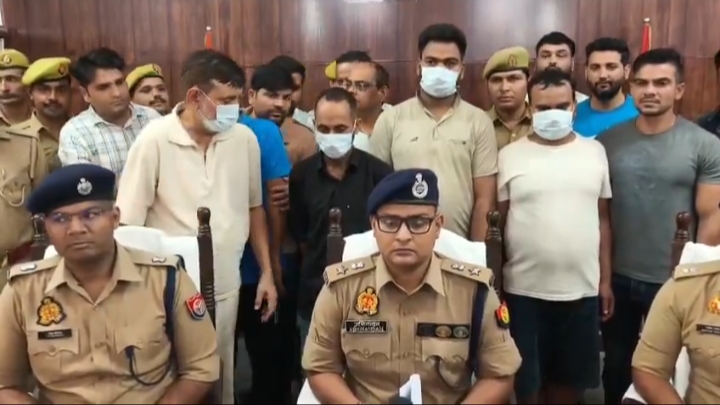
In just 18 months, Odisha has recorded a staggering 48,798 cases of crimes against women. National Crime Records Bureau (NCRB) data places the state at the very top in several shameful categories: No. 1 in Sexual Harassment in Public Places and No. 1 in Violent Crimes. It ranks No. 2 in overall Crimes Against Women.
The total cognizable crimes in 2025 reached 229,881, marking a sharp 7.3% increase from 214,113 cases in 2024. High-profile incidents — including student suicides linked to harassment, gang rapes, and communal tensions — have triggered widespread protests. Families across the state, particularly in urban centres like Bhubaneswar, Cuttack, and Rourkela, report feeling increasingly unsafe.
Opposition leaders argue that despite multiple review meetings chaired by the Chief Minister, the police response remains inadequate. “Criminals are roaming freely while the government is busy with photo-ops,” said a senior BJD spokesperson. Women’s safety, once a relative strength under previous regimes, has become the BJP government’s biggest political liability.
Economic Slowdown and Investor Exodus
The economic report card is equally worrying. Odisha’s much-hyped industrial ambitions appear to have hit a roadblock.
Gross State Domestic Product (GSDP) growth has declined sharply — from 9.6% in 2023-24 to 7.2% in 2024-25, with a marginal recovery to 7.9% in 2025-26. This deceleration comes at a time when several other states are accelerating post-pandemic.
Foreign Direct Investment (FDI) has virtually dried up. In FY 2024-25, Odisha attracted a mere ₹39 crore, accounting for just 0.009% of the national total — a figure opposition leaders describe as “humiliating” for a mineral-rich state.
Worse still, several marquee projects have exited the state. Major investors including JSW EV, ArcelorMittal Steel, S. Ram N. Ram Semiconductor, Waree Solar, and Welspun have reportedly withdrawn or stalled operations, raising serious questions about the government’s ability to retain and attract investment.
Odisha’s ranking in the Export Index slipped from 11th in 2022 to 15th in 2024, while its position in the National Startup Index crashed from 6th to 20th in the same period. These declines suggest a broader loss of momentum in economic governance.
Sectoral performance has also deteriorated. Agricultural growth has halved from 7.6% to 3.8%, impacting millions of farmers. Industrial growth fell from 8.7% to 6.1%, and service sector growth dropped from 11.5% to 10%. Rural distress is palpable, with many farmers complaining that promised bonuses and support schemes have either been delayed or insufficient.
Fiscal Mismanagement and Budgetary Concerns
Critics point to worrying signs of fiscal indiscipline. The state’s public debt has ballooned to ₹1.38 lakh crore, with 40% coming from high-interest open market borrowings. The fiscal deficit has doubled from 1.7% to 3.5%, while the primary deficit has surged from 1.1% to 2.9%.
Central grants to the state were slashed by 18.19%, falling from ₹21,011 crore in 2023-24 to ₹17,089 crore in 2024-25. This reduction has hit welfare programmes hard. Only 57% of the 2025-26 Budget has been utilised so far, indicating serious implementation gaps — a phenomenon opposition parties term as “governance paralysis.”
In a worrying move, the Health Budget was reduced by ₹453 crore, even as doctor shortages continue to plague government hospitals and rural healthcare centres. Persistent issues like hospital fires, medicine shortages, and poor infrastructure have further eroded public trust.
Odisha also recorded the highest inflation rate in India at 7.22%, adding to the financial burden on common citizens already struggling with rising prices of essential commodities.
Governance Lapses and Symbolic Politics
Beyond economics and security, several other failures have drawn sharp criticism. The government has faced embarrassment over 23 major examination failures and scams, shaking the faith of students and parents in the education system. Environmental concerns have also risen, with 185 elephant deaths reported in just 18 months — a worrying sign for a state known for its rich biodiversity.
In a move widely seen as cosmetic, the government has undertaken 28 arbitrary name changes of welfare schemes, replacing popular programmes with new branding while delivery on the ground remains poor. The abrupt discontinuation of the popular NUA-O Scholarship scheme has disappointed lakhs of students, particularly from backward and tribal regions.
Teacher vacancies, poor primary education infrastructure, and slow progress in tribal healthcare continue to persist. The tragic stampede during the 2025 Rath Yatra has also been cited as a major event management failure.
A Pattern of Unfulfilled Promises?
Two years ago, the BJP campaigned aggressively on the promise of transforming Odisha through the synergy of central and state governments. However, the data suggests that the “Double Engine” has struggled to deliver on multiple fronts.
BJD leaders, including former Chief Minister Naveen Patnaik, have repeatedly accused the government of “big announcements and zero delivery.” In a strongly worded statement on the occasion of the second anniversary, a senior BJD spokesperson said, “The people of Odisha expected Viksit Odisha. Instead, they got rising crime, falling growth, and mounting debt.”
The government, on its part, claims that it inherited a challenging fiscal situation and that long-term structural reforms are underway. Officials point to certain infrastructure projects and welfare initiatives that are in the pipeline. However, with low budget utilisation and several flagship projects exiting the state, critics argue that visible impact on citizens remains minimal.
The Road Ahead
As Odisha enters the third year of BJP rule, the pressure is mounting on the Majhi government to arrest the slide. Law and order restoration, economic revival, and improved service delivery in health and education are expected to be the top priorities if the ruling party wishes to regain public confidence ahead of future electoral battles.
The “24 Failures in 24 Months” list released by the Opposition is not just a political document — it reflects deep concerns among citizens, industry stakeholders, students, farmers, and women’s groups. Whether the BJP government treats this as a wake-up call or dismisses it as routine opposition criticism will define the next phase of governance in the state.







Leave a Reply