

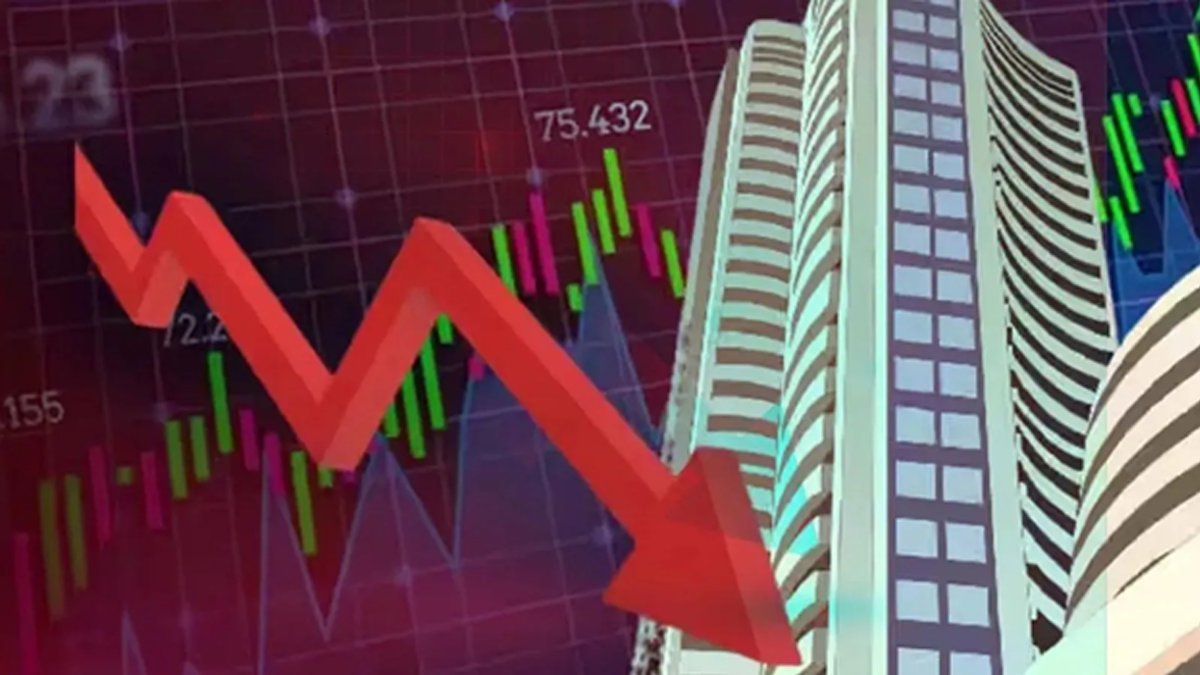
The Indian Equity Markets in March 2026: A Geopolitically Induced Correction
Pradeep Kumar Panda Economist, Bhubaneswar (darshansamikhya)
The Indian stock market has undergone a pronounced correction between late February and late March 2026, with the Nifty 50 and BSE Sensex declining approximately 12–15% from recent highs. This downturn, frequently described in market commentary as a “crash,” stems primarily from an external shock: the escalation of the US-Israel-Iran conflict and the consequent surge in global crude oil prices. Drawing on real-time market data, technical indicators, and macroeconomic linkages (including parallel movements in gold and silver), this article analyses the current state of the market, identifies causal mechanisms, offers a forward-looking forecast, and provides structured, evidence-based advice for equity investors. The analysis underscores that the correction is cyclical and externally driven rather than a reflection of domestic structural weakness.
Current State of the Indian Stock Market (February 23 – March 23, 2026)
As of the close on March 23, 2026, the Nifty 50 stood at 22,512.65, representing a cumulative decline of roughly 12.02% from its February 23 level near 25,713. The BSE Sensex mirrored this trajectory, closing in the vicinity of 72,700 after falling from approximately 83,300. The index experienced multiple severe single-session drops: March 19: Sensex lost 2,497 points (3.26%), erasing ₹11–12 lakh crore in market capitalisation, March 9 and March 11: Declines exceeding 1,300–2,400 points and March 23: A further 1,837-point drop (2.46%).
Total market-capitalisation erosion across BSE-listed companies exceeded ₹22 lakh crore. Sectoral damage was concentrated in oil-sensitive areas (banking, automobiles, private banks, and oil marketing companies). The India VIX (fear gauge) spiked sharply, signalling elevated uncertainty. Concurrently, the broader market confirmed a technical correction phase, having fallen more than 10% from the 2026 peak near 26,373.
Parallel developments in precious metals provide additional context. Gold (24K) and silver prices also corrected sharply—gold by 12–15% and silver by 20–30% in phases—reflecting the same macro pressures (stronger US dollar, hawkish Federal Reserve stance, and rising Treasury yields) that temporarily outweighed safe-haven demand.
Causal Analysis: A “Perfect Storm” of External Shocks
The correction is overwhelmingly exogenous. The primary trigger was the rapid escalation of hostilities in West Asia from late February, including US and Israeli strikes on Iranian targets and retaliatory disruptions to energy infrastructure. This threatened the Strait of Hormuz (approximately 20% of global oil transit), driving Brent crude from sub-$80 levels to peaks above $110–$119 per barrel—the highest since 2022.
As a net oil importer, India faced immediate headwinds: higher inflation, widened current-account deficit risks, corporate margin compression, and rupee depreciation to near-record lows (≈ ₹92–94/USD). Compounding factors included:
Record foreign institutional investor (FII) outflows (on track for the highest monthly total in recent years), Hawkish US Federal Reserve signals limiting rate-cut expectations amid energy-driven inflation concerns and Global risk-off sentiment amplifying Asian and emerging-market selling.
Domestic fundamentals—strong earnings growth projections, robust domestic institutional investor (DII) buying, and policy continuity—remained resilient, distinguishing this episode from endogenous crises such as 2008 or 2020.
Forecast for the Indian Equity Market
Short-term (next 1–4 weeks, through mid-April 2026): Bias remains sideways to bearish with high volatility. The market is event-driven; direction hinges on Middle East de-escalation signals and oil-price stabilisation. Key technical levels for the Nifty 50: Immediate support: 22,400–22,700 (breakdown risks extension to 22,000) and Resistance: 23,000–23,500 (sell-on-rise likely until reclaimed). Analysts (JP Morgan and domestic brokerages) warn of potential additional 10–12% downside if oil remains above $100/barrel and the Strait of Hormuz remains contested. GDP growth may moderate toward 6.0–6.6% under sustained pressure.
Medium-term (April–December 2026): A recovery trajectory is probable once geopolitical risks subside. Historical precedent (Gulf Wars, Israel-Hamas episodes) shows equity markets typically rebound strongly within 6–12 months. Pre-crisis targets from Morgan Stanley, Jefferies, and HSBC (Sensex 90,000–1,07,000 by year-end) remain plausible in a de-escalation scenario. Domestic institutional flows, selective value buying in defensives, and long-term earnings momentum provide a floor. Upside catalysts include oil correction below $100, Fed dovishness, and renewed FII inflows.
Gold and silver, having corrected in tandem, are expected to exhibit structural bullishness longer-term due to persistent inflation hedging, central-bank demand, and (for silver) industrial supply deficits. They may serve as portfolio stabilisers during equity volatility.
Investment Advice for Indian Equity Investors
Short-term posture (capital preservation priority): Adopt a defensive stance: “Sell on rallies” until Nifty sustainably reclaims 23,500–24,000, Maintain strict stop-loss discipline; avoid leverage, Overweight large-cap and defensive sectors (FMCG, pharmaceuticals, IT, utilities); underweight cyclicals (autos, OMCs, chemicals) and Increase allocation to liquid or hybrid funds to navigate choppiness.
Long-term strategy (horizon ≥1 year): View the correction as an opportunity for quality accumulation at discounted valuations. India’s structural growth story—consumption, digitalisation, manufacturing—remains intact. Recommended actions: Deploy systematic investment plans (SIPs) or systematic transfer plans (STPs) into large-cap, multi-cap, or aggressive hybrid mutual funds to average costs, Maintain portfolio diversification: 5–15% in gold/silver (via Sovereign Gold Bonds, ETFs, or digital gold) as a natural hedge against geopolitical and inflation risks, Sector rotation post-stabilisation: selective exposure to banking/financials, defence, and energy-security themes and Asset allocation rule: Large-caps ≥ mid-caps; small-caps underweight until volatility subsides (per veteran fund managers such as Nilesh Shah).
Investors should monitor five variables daily: Brent crude prices, India VIX, FII/DII flow data, USD/INR, and geopolitical headlines. Emotional decision-making must be avoided; disciplined, goal-aligned investing through volatility has historically generated superior compounded returns in India.
The March 2026 Indian equity correction constitutes a classic externally triggered drawdown rather than a fundamental reversal. While short-term volatility will persist until West Asian tensions ease, the medium-term outlook remains constructive given resilient domestic drivers. By preserving capital in the near term, diversifying intelligently (including modest exposure to corrected precious metals), and accumulating quality assets on weakness, investors can position themselves to capitalise on the eventual recovery. In an uncertain global environment, patience and process remain the most reliable investment virtues.










Leave a Reply