

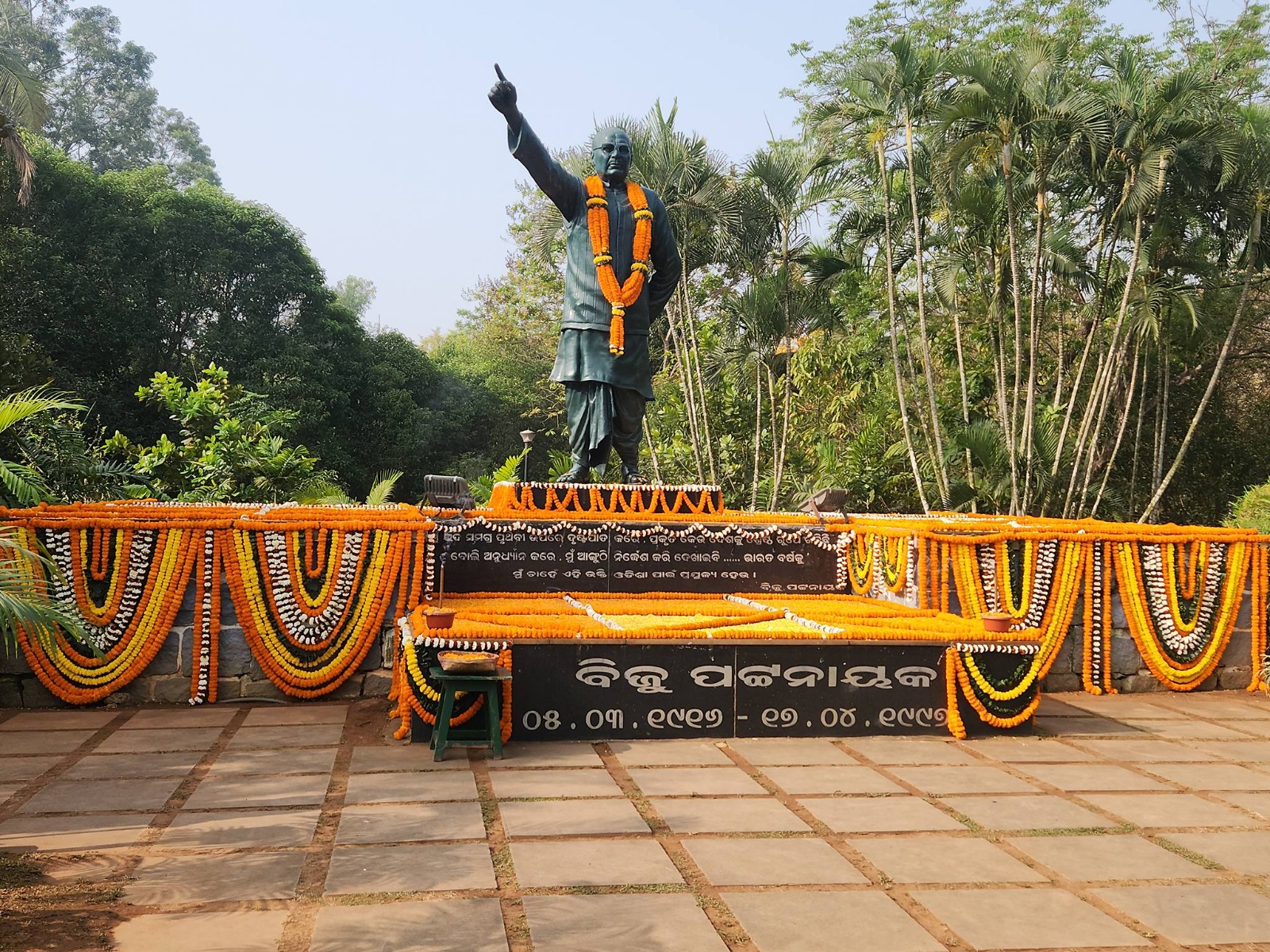
Biju Babu: The Soul of Odisha Pride, Celebrating 110 Years of an Unforgettable Legacy
Pradeep Kumar Panda
Darshan Samikhya, Bhubaneswar
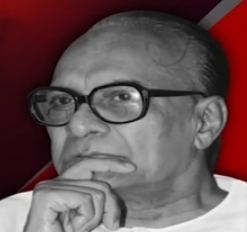
Today, as the sun rises over the Mahanadi and the bustling streets of Cuttack, Odisha pauses to honor a towering figure whose spirit still fuels the state’s unyielding ambition. Bijayananda Patnaik, fondly called Biju Babu or the “Tall Man,” was born exactly 110 years ago in the heart of Cuttack, a son of the soil whose life wove adventure, sacrifice, and vision into the fabric of modern India. Affectionately known as the “Soul of Odia Pride” (Odia Swabhiman), Biju Babu’s extraordinary saga—from daring aerial rescues in foreign lands to architecting Odisha’s industrial dawn—continues to inspire generations. On this milestone birth anniversary, we revisit his life, blending well-trodden tales with lesser-known gems that reveal the multifaceted genius behind the legend.
Roots of a Revolutionary: Early Life and the Fire of Freedom
Biju Patnaik entered the world on March 5, 1916, into a family steeped in patriotism. His father, Lakshminarayan Patnaik, was an Odia ideologue, while his mother, Ashalata Devi, hailed from Bengal, infusing him with a rich cultural mosaic that mirrored India’s own diversity. Educated at Cuttack’s Mission Primary School, Ravenshaw Collegiate School, and later Ravenshaw College in the science stream, young Biju was no ordinary student. An avid sportsman and bridge enthusiast, he captained the college football team to three consecutive inter-school championships, channeling his boundless energy into both the pitch and the streets of resistance.
Even as a teenager, Biju was drawn to the national liberation movement. At just 10, he braved a police lathi charge while trying to glimpse Mahatma Gandhi in 1926. Influenced by Odia stalwarts Gopabandhu Das and Madhusudan Das, as well as Gandhi’s ideals, he plunged headlong into the freedom struggle. A lesser-known escapade from his schooldays underscores his audacious spirit: In 1932, at age 16, Biju cycled an astonishing 4,500 miles (over 2,000 km each way) from Cuttack to Peshawar (now in Pakistan) with two friends. Dubbed the “Visit India Mission,” this grueling journey aimed to spread messages of humanity and unity across a divided subcontinent—a testament to his early zeal for bridging divides.
His commitment deepened during the Quit India Movement, where he collaborated with revolutionaries like Aruna Asaf Ali. Imprisoned from 1943 to 1945 for his defiance, Biju turned his Delhi residence, Ananda Bhawan, into “Absconder’s Paradise”—a safe haven for underground freedom fighters, including Asaf Ali herself. A socialist at heart, inspired by Acharya Narendra Deva, Jayaprakash Narayan, Ram Manohar Lohia, and Minoo Masani, he embodied values that prioritized public welfare over personal gain.
Wings of Courage: Aviation Adventures and Global Heroism
Biju’s passion for the skies defined his early career. Dropping out of Ravenshaw College to pursue aviation, he earned his pilot’s license in 1937 at age 21. During World War II, as head of the Royal Indian Air Force’s Air Transport Command (1940–42), he smuggled subversive literature to Indian troops and supplied arms to Soviet forces battling Hitler, earning rare honors from Russia in 1945. Ironically, the British commended him for releasing their families from Japanese captivity—only to jail him later for ferrying Indian nationalists in his planes.
His international exploits peaked in Indonesia’s 1947 freedom struggle. At Jawaharlal Nehru’s behest, the 31-year-old Biju, with co-pilot wife Gyan and their 14-day-old son left behind, flew a Dakota to blockaded Jakarta. Defying Dutch threats to shoot him down, he quipped that “Resurgent India” recognized no Dutch sovereignty over Indonesian skies. Landing on a makeshift paddy-field airstrip, refueling from abandoned Japanese dumps, he evacuated Vice-President Mohammad Hatta and Prime Minister Sutan Sjahrir to Delhi via Singapore. For this, Indonesia bestowed him honorary citizenship as “Bhumi Putra” (Son of the Soil) and later the “Bintang Jasa Utama” in 1996. A heartwarming footnote: Biju and Gyan named Sukarno’s daughter “Megawati” (Goddess of Clouds), a gesture of enduring Indo-Odia bonds.
In 1948, Biju airlifted the first Indian troops to Srinagar to repel Pakistani raiders, a pivotal moment in the Kashmir saga. His aviation flair extended to personal milestones: In 1938, he piloted the groom’s party—himself included—to Lahore for his wedding to Gyan, a Punjabi beauty, with Tiger Moth planes soaring in formation over their honeymoon train the next year. Founding Kalinga Airlines in 1947 with a fleet of 15–16 Dakotas, he bolstered India’s defenses by transporting soldiers to Kashmir and supplies to the Northeast.
Architect of Modern Odisha: Industrial Vision and Political Mastery
Before politics, Biju was a trailblazing industrialist, establishing Kalinga Tubes, Orissa Textile Mills, and Kalinga Iron Works. As Chief Minister (1961–63 and 1990–95), he etched Odisha onto India’s industrial map. At 45, he became India’s youngest Chief Minister in 1961, a record that symbolized his youthful vigor. His blueprint included the Paradeep Port (self-funded when Delhi demurred in 1966), the Express Highway, MIG factory, cement plants, irrigation projects, and two new universities—transforming a backward state into an economic powerhouse.
A fervent federalist, Biju believed strong states forged a robust nation. He championed minimum wages, women’s empowerment via reservations in jobs and local bodies (pioneering 33% Panchayat seats for women in 1990–95, influencing the 73rd Amendment), prohibition, and anti-dowry laws. In a bold rural upliftment stroke, his Panchayat Industries scheme birthed seven sugar mills, 20 tile units, and more within a year, earning global acclaim from U.S. Ambassador Chester Bowles and Jayaprakash Narayan. He reformed Odisha’s power sector first in India, unbundling generation and distribution to invite private players like AES, while boosting mini-hydel and wind energy. Famously, he hiked unskilled wages from Rs 11 to Rs 25 in 1990 after a poignant plea from a village elder, and once urged citizens to “thrash” inefficient officials delaying public works.
National Statesman and Science Patron
Elected to Odisha Assembly seven times from 1947, Lok Sabha (Kendrapara and Aska), and Rajya Sabha, Biju served as Union Steel, Mines, and Coal Minister (1977–80), infusing dynamism into the sector. Chairman of the Parliamentary Finance Committee (1996–97), he was a parliamentary titan. Jailed during the 1975 Emergency for defying Indira Gandhi, he rebounded to shape coalitions—reportedly reluctant for PM in 1989 yet pivotal in HD Deve Gowda’s 1996 ascension.
A science visionary, Biju founded the UNESCO-monitored Kalinga Prize in 1951 to democratize knowledge. In 1993, consulting Dr. APJ Abdul Kalam, he greenlit Wheeler Island’s missile range—insisting tests reach Beijing, not mere “firecrackers”—laying groundwork for India’s strategic edge. He personally funded meritorious students’ overseas studies, from Germany to global conferences, demanding only progress reports in return.
Eternal Legacy: A Colossus in Three Flags
Biju Babu departed on April 17, 1997, at 81, not in Bhubaneswar’s Naveen Niwas but at confidant Dilip Ray’s Delhi home—his wish for a swift plane-crash end unfulfilled. In a poignant tribute, his body was draped in the flags of India, Russia, and Indonesia—the only Indian so honored. With a 56-inch chest and unyielding optimism, he remains an icon for youth, his Biju Janata Dal carrying his federalist flame. Odisha marks his birth as Panchayati Raj Day, a nod to his democratic zeal.
Deep homage to Biju Babu—the Kalinga Putra, Big Daddy of Indian Aviation, and eternal Bhumi Putra. In his words, a strong Odisha builds a mighty India. Deep Homage on 110th Birth Anniversary to Tall Man !!!


Leave a Reply